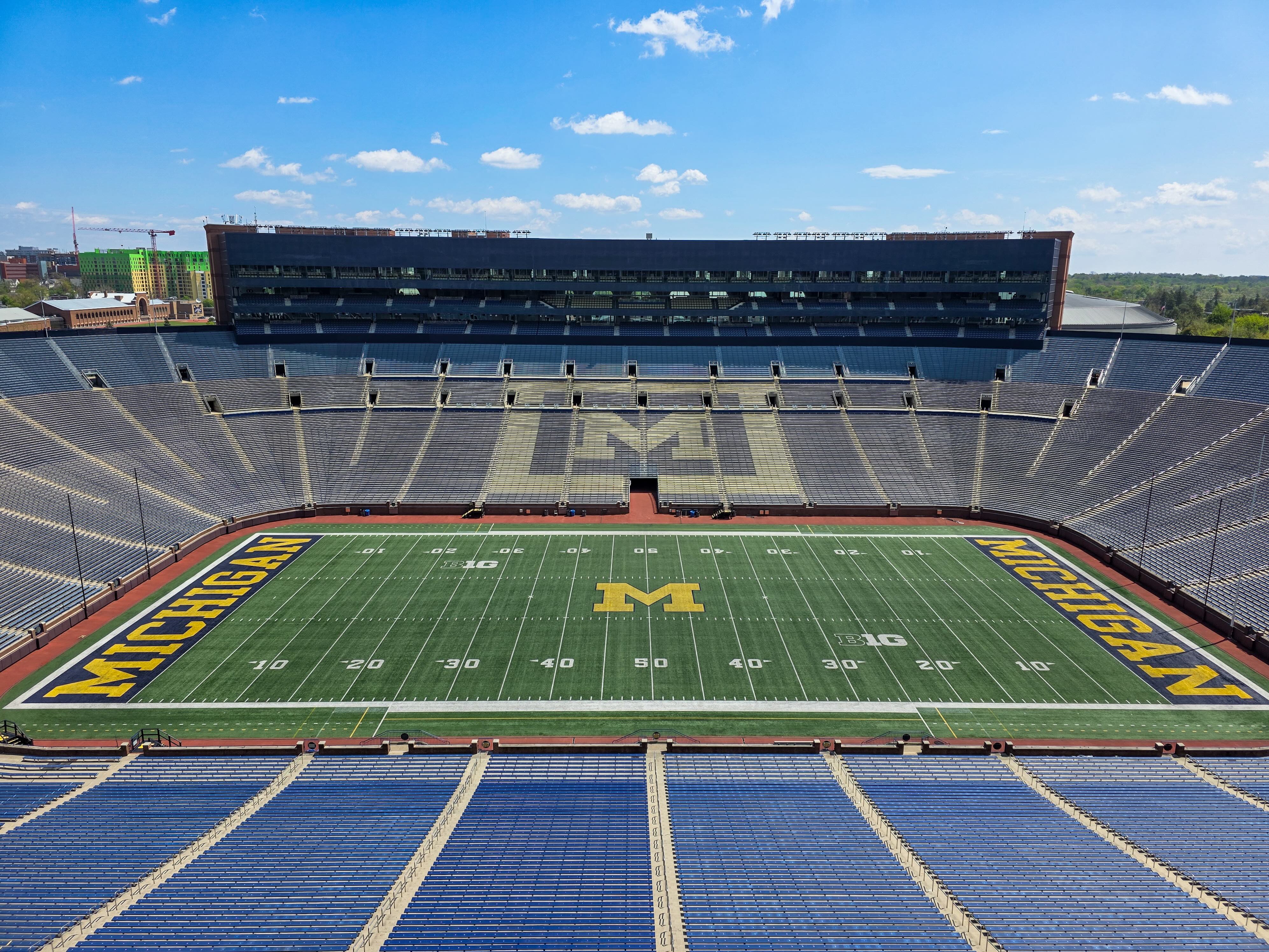
College coaches at programs like Michigan, Georgia, Alabama, and Florida State are not short on recruiting leads. They are short on time. A prospect who sends a well-produced recruiting video gets evaluated. A prospect who sends shaky phone footage from the bleachers gets skipped.
That gap is not about talent. It is about presentation. And it is a problem that a professional sports video solves.
Why Recruiting Video Matters More Now
The recruiting landscape has shifted significantly over the last few years. NIL changed how programs think about athlete value beyond the field. Social media means coaches are evaluating an athlete’s presence and marketability alongside their stats. And the sheer volume of recruiting profiles on platforms like Hudl, NCSA, and social media means standing out visually is more important than it has ever been.
A high-quality recruiting video does several things at once. It shows athletic ability in a controlled, easy-to-evaluate format. It signals that the athlete and their family are serious about the process. And it gives the coach something shareable: a clip they can send to a position coach or offensive coordinator without having to explain what they are looking at.
What College Coaches Actually Watch
Coaches are not watching five-minute highlight reels from start to finish. They are scanning. They decide in the first 15-30 seconds whether to keep watching.
That means the structure of the video matters as much as the content. The best plays need to come first, not third. The footage needs to be clear enough to read assignments and technique, not just outcomes. And the production quality needs to be high enough that the coach is not fighting the footage to see what they need to see.
A professional sports videographer knows how to capture the angles coaches care about, not just the spectacular moments, but the release point on a throw, the first three steps off the line, the positioning on a defensive coverage. Those technical details are what get an athlete from the initial watch to a phone call.
What a Recruiting Video Package Covers
A full recruiting video package from NearDrone includes:
Game and practice footage Multi-angle coverage of live competition. We position cameras to capture both the full-field context and the close detail coaches need to evaluate technique. For most sports this means at least two angles: one wide for scheme reads, one tighter for individual technique.
Drone aerials For outdoor sports, drone footage adds a dimension that ground-level cameras cannot. A drone above a football field shows route spacing, defensive alignment, and field vision in a way that a sideline camera simply cannot. Coaches evaluating linemen, defensive backs, and quarterbacks particularly benefit from the overhead angle.
Edited highlight reel A 2-3 minute edited reel built for recruiting platforms and direct submission to programs. Best plays first. Clean cuts. No filler. Formatted for Hudl, NCSA, BeRecruited, and direct email submission.
Short-form social cuts 15-30 second vertical clips formatted for Instagram Reels and TikTok. In 2026 coaches are absolutely looking at an athlete’s social presence. A clean, well-produced highlight clip on an athlete’s Instagram builds credibility and reach simultaneously.
Headshots and action photography Still images for recruiting profiles, team bio pages, and social media. A strong action photo is often the first thing a coach sees on a recruiting profile before they ever click play on a video.
Sports We Cover
NearDrone works with athletes across a range of sports. Drone footage is particularly impactful for:
- Football: route running, defensive schemes, special teams
- Soccer: positioning, field vision, set pieces
- Lacrosse: field coverage, dodges, transition play
- Track and field: relay exchanges, field events from above
- Baseball and softball: outfield reads, infield range, pitching mechanics from elevated angle
- Tennis: court coverage, movement patterns
For indoor sports or venues with airspace restrictions, we cover with multi-camera ground setups that still deliver broadcast-quality footage.
The Georgia and Gulf Coast Markets
NearDrone is based across Canton GA, Tifton GA, and Panama City Beach FL. We work with high school programs, club teams, and individual athletes across all three markets.
Cherokee County and the surrounding North Georgia area has a deep pool of athletic talent feeding programs across the SEC, ACC, and Sun Belt. The Tifton and South Georgia market sends athletes to programs throughout the state and region every year. And the Florida Panhandle produces athletes across football, baseball, and water sports who are competing for attention from major programs in the SEC and Big 12.
In all three markets, the athletes getting scholarship offers from major programs are the ones who show up professionally in the recruiting process. That starts with video.
Frequently Asked Questions
What year should a high school athlete start building recruiting video? Sophomore year is not too early for standout athletes in high-profile sports. Most college coaches begin seriously evaluating prospects in the junior year, which means the video needs to exist and be polished before that window opens. Starting junior year works for most sports. Waiting until senior year is too late for D1 programs.
How long should a recruiting highlight reel be? Two to three minutes for the main reel. Coaches will not watch longer than that on a first look. Some programs specify shorter, so always check the program’s recruiting page for preferences. The short-form social cuts (under 30 seconds) are separate and serve a different purpose.
What is the difference between a recruiting video and a highlight reel? A highlight reel is a collection of best plays. A recruiting video is a complete package. It may include an introduction from the athlete, a brief skills section, and game footage organized to show the specific qualities a coach at that position evaluates. For D1 recruiting especially, a full recruiting video outperforms a raw highlight reel.
Does drone footage actually help with recruiting videos? For outdoor sports, yes. Particularly for quarterbacks, defensive backs, midfielders in soccer, and any skill position where field vision and spatial awareness are evaluated. The overhead angle shows what the athlete sees and how they process it. Coaches who recruit these positions have told us directly that aerial footage gives them information they cannot get from sideline cameras.
Can NearDrone shoot at my school or facility? We work with high schools, club programs, and private facilities across our three markets. For drone operations we handle all FAA coordination. Some school districts require advance notice or have specific policies, and we navigate that process with you before the shoot date.
How far in advance should we book? For game-day shoots, two to three weeks minimum. For practice or skills sessions, one week is usually sufficient. Spring and fall competition seasons book up fast, so earlier is better.
What do we need to prepare before the shoot? A schedule of upcoming games or practice sessions, the athlete’s jersey number and position, and any specific plays or skills the athlete wants highlighted. If there is existing footage from previous seasons, send it ahead of time and we can incorporate it into the final edit.
What platforms should the recruiting video be on? Hudl is standard for most sports and required by many programs. NCSA and BeRecruited are widely used for the profile side. Direct email submission to coaches is still the most effective outreach method. The video needs to be embeddable and linkable, not just downloadable. We deliver in formats that work across all of these.
Getting Started
If you have a sophomore, junior, or senior athlete working toward a college scholarship, the time to build the video is before the coaches come calling, not after.
NearDrone works directly with athletes and families. No agency, no middleman. Reach out at neardrone.com/contact or call 678-800-1216 to talk through your athlete’s sport, timeline, and what the right package looks like.