
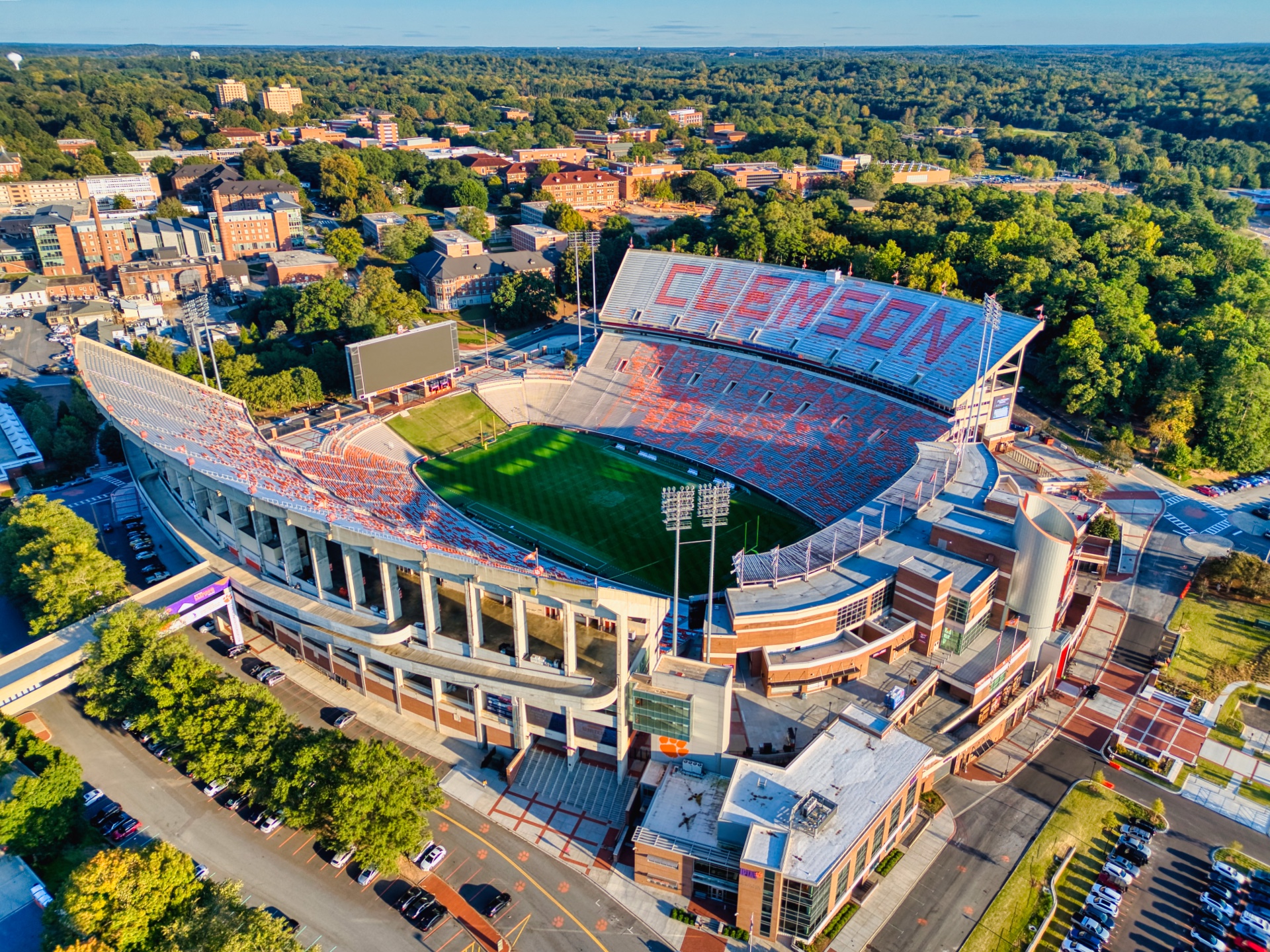
Short answer: yes, you can fly a drone to film most high school football games, but only if it is done legally. That means a certified pilot, the right airspace clearance, and compliance with the rules for flying over people. The bigger the venue and the bigger the event, the more restrictions apply, and at the largest stadiums drones are banned outright. Here is what actually applies, so you know whether the person filming your game is doing it right.
You need an FAA Part 107 certificate
Filming a game for a program, a booster club, or any commercial purpose is a commercial drone operation. That requires the pilot to hold an FAA Part 107 Remote Pilot Certificate. A hobbyist flying under the recreational exception cannot legally film your game for the school or sell the footage. If someone offers to shoot your game and does not hold Part 107, that is your first red flag.
The stadium TFR: why you cannot fly at the biggest games
This is the rule most people have never heard of. The FAA has a standing Temporary Flight Restriction for stadiums that seat 30,000 or more people, in effect during and around major events: NFL, MLB, NCAA Division I FBS football, and major motor speedway races. From one hour before to one hour after the event, no drones (and no aircraft without special clearance) may fly within three nautical miles of the stadium.
What that means in practice:
- Big-time college football (Division I FBS) and pro games: off limits. You cannot legally fly a drone over those stadiums during the event window.
- High school, youth, and most club games: not covered by the stadium TFR, because those venues are well under the 30,000-seat threshold. Flying is generally allowed, subject to the rules below.
So for a typical Friday-night high school game, the stadium TFR is not the obstacle. For a Saturday game at a major university, it usually is.
Airspace authorization near airports
Even at a smaller venue, where the field sits matters. If the stadium is in controlled airspace near an airport, the pilot needs authorization before flying. Most of this is handled instantly through LAANC, the FAA’s automated authorization system, but it has to be done, and some areas require a manual waiver that takes time. A good operator checks the airspace for your specific venue before the day, not after they show up.
Flying over people and moving vehicles
A drone over a packed stand of fans is “flying over people,” which the FAA regulates specifically. The rules depend on the drone’s weight and safety category, and whether people are actively under the flight path. In practice, a careful operator positions flights over the field and open areas, not directly over crowds, and uses the aircraft category appropriate for the setting. This is a planning and judgment issue, and it is one of the clearest differences between a professional and someone winging it.
Night games are allowed, with lighting
Most high school football is played under the lights, and that is fine. Part 107 permits night operations as long as the drone has operating anti-collision lighting visible for three statute miles. No special permission is needed beyond the standard rules. The footage from a well-lit stadium at night is often the best of the season.
Get the venue’s permission too
The FAA governs the airspace, but the school, district, or venue controls the property and can set its own policy. Even when a flight is perfectly legal, a professional confirms permission with the athletic department or venue first. It avoids a sideline confrontation and keeps the program out of any dispute.
The short version
For most high school and club games, yes, a drone can legally film the action, provided the pilot is Part 107 certified, clears the airspace, flies responsibly around the crowd, and has the venue’s okay. For major college and pro stadiums, the stadium TFR usually rules it out during the event. If you are not sure which applies to your venue, that is exactly the kind of thing a certified operator sorts out before the shoot.
NearDrone is FAA Part 107 certified on every flight and handles airspace authorization, so your program does not have to think about it. See how we cover game day or ask us about your venue.